Tuesday, October 1, 2013

Be true to your fool

For five weeks, every time she passes the mural featuring cheery pairs of animals embarking on Noah's ark, she points and says, "My fool! My fool!" She is excited about her new preschool, mostly because it has a playground.

The morning of her first day, I ask if she is ready to go to school. "No. I want to go to the other playground."
She is alternately fussy and exuberant, eating only a few bites of her scrambled egg.
Watching me pack her lunch, she carefully selects a blueberry yogurt and puts it in the new Hello Kitty insulated lunch box, purchased during a special trip to Chinatown for this very occasion.

She poses for a picture in front of the school's yellow banner. She meets her teacher and plays with small cows, Play-doh, a spatula. She hands the only other girl in her class a Lego and calls it a "robot."

They will be friends.

Still, when I tell her I have to leave for work, she cries. Fat salty tears bump down her perfect pink cheeks. "I wanna go to work! I wanna go to work!" she says, as she clings to my neck like it's a buoy, like she will drown into a cold dark sea if she lets go.

I peel her off and hand her to a woman I have known exactly 35 minutes.

The girl wails as I walk past the sand pit and out the gate. I hide behind a wall. For what, 5? 10? minutes she uses a year's worth of breath to scream her displeasure.

When she finally stops, I peek in through the gate. She is sitting on a stoop, alone, sucking on the green and pink butterfly blanket her grandmother made her, watching the kids play in the sand.


Tuesday, September 24, 2013

Work: Sometimes you have to pee in the pool


I had an eccentric Great Aunt Vida, who lived in a sprawling home that slinked around a prime piece of Hood Canal coastline in Washington state. She was a bit formal, had married well and widowed young, and was in no way comfortable around children. When my cousins came to visit, she gave them the standard speech as they prepared to jump into her indoor pool: "I have a special chemical in here that turns red when you urinate, so don't, or I'll know it's you."

The kids, in their elementary years, solemnly nodded and proceed to jump in the pool. After several minutes of splashing about, the youngest, Liam, yelled out, "Aunt Vida? That chemical? It's not working!"

I love this story because mostly when my Aunt Corinne (Liam's mom) tells it, it's really really funny, each and every time. But I also love it because it makes me think about how brave and bold Liam was as a little kid, completely unaware of his own vulnerability as he spoke a truth that he thought would be helpful. Not sure what Vida's reaction was, but it likely involved a thimble of sherry to soothe her nerves.

I recently watched this Brené Brown TED video on vulnerability, and it has made me think a lot about the offer-reception dynamic of ideas. In order to have a truly innovative idea, you need to risk failing, because it hasn't been done before. You are putting the work of your mind and heart in the hands of others who will help it succeed -- or not. How the idea is received is just as critical. Nearly every organization or manager will tell you that failure is treated as a learning opportunity ... but how that is actually handled will vary greatly. I've worked for some bosses who have been so enthusiastic and welcoming for my ideas that I couldn't wait to fail for them again, if it meant having excellent feedback and the chance to build an even better rocket ship. I've had bosses who've sent such cryptic, critical emails that I spent entire weekends downing Ativan to keep a panic attack at bay, certain I'd be fired Monday morning, but then nothing was ever mentioned again.

I've been fortunate enough to have a career based on ideas, where my creativity has funded my home and car and makes me look good on paper for government bureaucrats. I've also been lucky enough to help develop ideas from others and collaborate to make them into real things. Because of that, I offer this:

If you're proposing your idea -- whether its a better way to clean the coffee pots at the wait station, a rerouting of the entire metro transit system so it runs more effectively and efficiently, or handing over your life's work, laced with sweat, tears and a little merlot -- these approaches may help:
  1. Find a good time to propose your idea -- when the recipient has space to hear you, and is in a good mood. Also, think about your format. Is it scrawled on a napkin, or did you go to the trouble of making a trailer for it? 
  2. Preface your presentation with what you hope to accomplish, and how far along you are in your idea. If it's just an initial draft with lots of flexibility for change, or if it's pretty much baked as is, let the person know. 
  3. State exactly what you want. Is it an approval to take it to another level of management? Are you looking for collaboration? Do you just want some feedback on a particular angle?
  4. Really understand what the response is. So if the person said, "I love the idea but I'm wondering if you can make it puppets instead of real people," and you heard, "Your idea stinks, go away," you may miss an opportunity to make your idea happen ... just not exactly as you'd planned. Sometimes puppets are better. 
If you are on the receiving end of an idea:
  1. Realize the person offering may have invested a lot of hope and love in this. Treat it accordingly. It's hard to be creative, like handing over your fragile little heart in a paper cup, hoping someone else will help it keep beating.  
  2. Take a cue from improv: Don't shut down another actor. Say, "yes ... and ... ." As in: "Yes, I think you are really on to something, and I'm wondering if there's a way we can include puppets because I know that's what the network is looking for and we'll have a better chance of making this happen." 
  3. If you love the idea, be a champion for it. Be brave, it makes people like you better. If you don't like the idea, find a way to make it better. There might be a seed in there somewhere. 
Sometimes it pays to pee in the pool, just to see what happens.


Thursday, September 5, 2013

Garbanzo bean quiche, preschool and entree envy


Grace is pretty much the TA at her daycare, which is run by our fabulous, big-hearted and beautiful neighbor, Valentin, out of her apartment. There are two smaller kids, and Grace "helps" to feed and change them. It's been the absolute perfect situation and Grace is madly in love with her daycare family, as they are with her. This summer Grace and I spent vacations and free moments in other people's yards and pools, and I noticed how much she needs to run around. I notice that she counts a lot of things ("one, two, fwee, five, eight!") and whenever we pass a school, she wants to go there. I suspect that the playground has a lot to do with it. So I asked her if she's ready to go to school, and she said yes. I told her that it would be a little different than daycare and that she'd have a teacher and she'd have a lot of other kids there. "OK Mom." Every time I followed up, her answer is the same. She wants to go to school.

So we looked at several nearby preschools that were willing to take 2-year-olds who were unmotivated in their potty training. One place was great but a little far. Another was horrific, with a 12:1 student/teacher ratio and an industrial bleachy odor ("We clean four times a day!" chirped the director as she toured us around the cavernous building). Out in the vast concrete prison yard that had a small area where they crammed a bunch of slides and swings under a small tarp, a kid closed the door on Gracie in the play house, and she ran to me screaming and crying. Scratch that one.

Finally we found a school a block away that's attached to an Episcopal church. There's a Noah's Ark mural on the outside. Lots of space to play. A charming director. Organized but not mean-spirited. They say prayers of gratitude for parents and play kitchens, and learn the Bible's greatest hits. For a spiritual but non-religious person, I am OK with that.

However. The kids have to  bring their lunch. That news sent me reeling back to childhood lunchtime trauma. We were raised by my dad, who, in the late 1970s, was in the process of writing what would become a New York Times best-selling diet book. Our food became limited to Pritikin Program low-fat, high-carb fare, which, living two blocks from Zabar's, was a unique kind of torture. Gone was the nightly ice cream, our babysitter's Southern fried chicken, the Oreos my dad reserved for "company." Instead, we made due with baked potatoes adorned with some plain yogurt my dad made himself. There were some passable oatmeal-raisin "cookies" sweetened with apple juice concentrate. And garbanzo bean quiche. Seriously. I am not making this up, nor would I be able to. Garbanzo-effing-bean quiche.

Lunches were less than creative. An endless stream of peanut butter and jelly sandwiches on wheat and maybe a brown banana shoved into a rumpled brown bag, or worse, a huge brown grocery bag. Day in and day out. (I remember one particularly heinous incident of a cheese and butter sandwich, which I brought home from day camp and insisted my dad try. He conceded that it was crap.) Lisa, my best friend, would get ham and cheese on Wonder bread with a Twinkie, a soda wrapped in foil to keep it cold, and a Thermos of soup all tucked neatly inside a Snoopy lunchbox. I so desperately had entree envy for Lisa's lunches, and also, the snacks her parents stocked at home, which was conveniently located one floor below us. Nutter Butter cookies. Yoo-hoo chocolate soda. Triscuits.

Something must have worked its way into my hard wiring, though. Today I get most of my food from the farmers' market, and then Trader Joe's for the milk and not-so-bad prepared food. We limit sugar and anything processed. I spent a good deal writing about food for many fine publishing outlets, and was even invited by Japan to come write about the incomparable food the country has to offer. I can work my way around a fridge and stove pretty well. Gracie and I sit down to a good breakfast and dinner every morning and evening. Lunch is whatever is happening over at daycare, and because the dad is a baker, I know it's going to be good.

BUT. Here's my point.

I sense an unforeseen issue with having to pack Gracie's lunches at her new school. I know my instinct will be to shove last night's leftover Trader Joe's pakoras in a baggie and call it good. I'm insecure that after three days I'll run out of ideas, and I won't be prepared. I don't want her to have entree envy with the kid who brings the bento box with all his favorites, and Grace will make a grab for it out of desperation. I'm feeling like I've already come in last in what's not even a competitive sport, lunch-making.

Pakoras can fit into a bento box, right?

Tuesday, August 13, 2013

How to Get a Rich Man and and Other Things You Might Need to Know


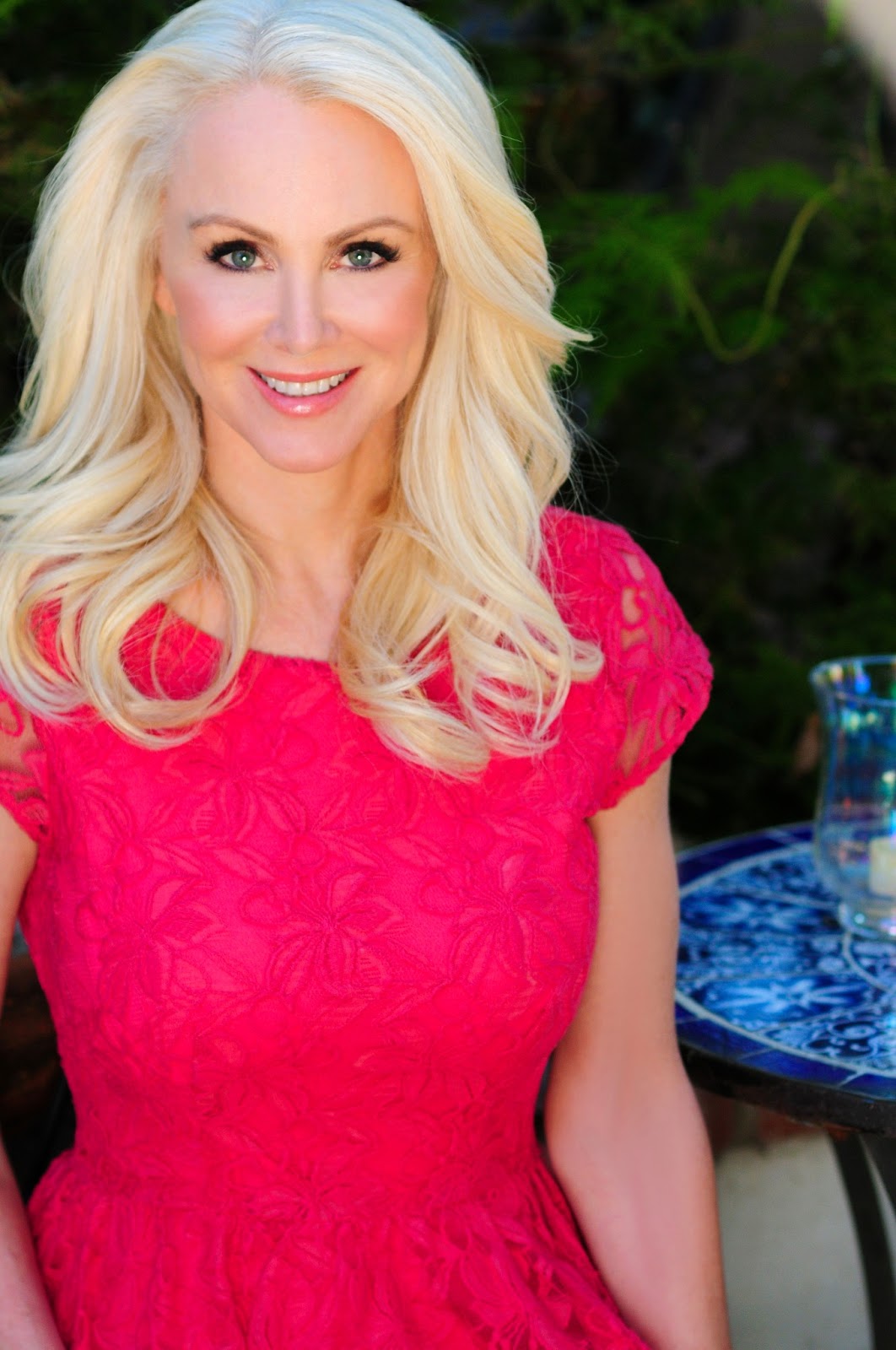
Today's guest is Donna Spangler, a beauty, fitness and lifestyle expert, blogger and author of "How to Get a Rich Man; The Princess Formula." But before you click off this page in disgust and think that she's undermining everything we've worked so hard for, read on to see what she means by "rich," it's better than it sounds. Donna is at work on another book and about to launch her line of Donna Spangler Beauty cosmetics. 

Donna Spangler
1. Finances get really complicated for couples when we're in our 40s, especially if there's a wide disparity in incomes. How can you avoid the money issue in a relationship?

Being a couple is first and foremost, a partnership.  When you commit to each other, you are committing to building a life together.  Complications with money usually occur when there is a lack of communication.  It is imperative that complex money issues are discussed with one another.  You need to both express where you each see the money going and how you feel it should be spent.  For example…Is the money going towards a vacation or towards the children’s school tuition?  You need to clearly lay out what each persons financial responsibility is and if the responsibility is fair.  Often one spouse makes more money than the other.  In this case, establish and understand that perhaps they will then carry the bulk of the financial obligations.  In a relationship, money should always be distributed in a fair and equal manner to ensure a harmonious and long relationship.  Any unfair distribution of finances will often lead to resentment and problems down the line.  The bottom line is to always lay down the ground rules of what each person expects of themselves and the other at the very beginning!    

2. You look amazing. What's your surprising secret, beyond genes, eating right and exercising?
I believe in doing everything possible to help maintain a vital and healthy body. Vitamins are very important for me.  I take them daily to ensure I am getting those vitamins that I may have missed in my diet.  I love protein shakes and I eat a ton of vegetables and very lean meat.  I exercise regularly with weights and I do Taekwondo and I make sure to get ample hours of sleep.  I drink a ton of water.  Water cleans out your body, helps promote healthy skin and it makes you feel fuller throughout the day so you don’t get as hungry.  I admit that like many gals out there, I do a little Botox here and there.  I go to the dentist regularly and I visit my hair stylist to maintain my hair cut and color.  Looking good is a heck of a lot of work.  The older we get, the more diligent we gals have to be. I’m not saying that I am trying to look like a teenager or someone in my 20s.  Don’t get me wrong.  I am just saying that as we age, keeping up our appearance and maintaining a strong body is important for our health and our mental well-being.

3. You wrote a book about how to marry a rich man. How is that different than gold digging? What else is important for women in their 40s to seek out in a mate that they might not have valued earlier in their lives?

My book, How To Get A Rich Man: The Princess Formula came out in 2007 and since then it has been translated into multiple languages.  The title is sort of tongue and cheek.  My main message in the book is for women to be the best that they can be to attract the right kind of man that is ultimately rich in heart and spirit.  If you can find one with an abundance of financial means, there is nothing wrong with that but it is not the most important thing.  Most women want a man who is loyal, loving, kind, considerate, humorous and respects them.  Finding a man with common interests and the same goals in life is important for the right chemistry.  You can find the richest man in the world but if he does not love and respect you, then he is worthless in my opinion.   

4. Anything else you think is important to know about life after 40? 

Life after 40 should be empowering!  After 40 we have finally gained so much wisdom and insight.  We should be fearless in going after all of our goals.  We should lose the fear that often traps us.  Don’t look at yourself as getting “old.” Look at yourself as getting “better” and empower yourself!  Start looking at yourself as someone who has a lot to contribute to this world.  Above all, spread your love and goodness and enjoy life’s ever-abundant journey!


Thursday, August 1, 2013

Home

The shattering glass and splattering milk on the shiny marble hotel floor was more than just a broken bottle. It was the end of an epoch. I looked at 22-month-old Grace for signs of freaking out, and then took a picture of the mess before the bellmen scurried around to clean it up.

"OK Grace," I explained after throwing several bills at the workers and apologizing profusely, as I had done exactly 11 times before, because usually the broken bottles occurred on hard restaurant floors, or the concrete sidewalks under an outdoor table. "The last bottle is broken. Bottles are for babies, and you're a big girl now. No more bottle. Say bye-bye to ba-ba."

"Ba-ba broken," she repeated over the next few days, sometimes as a statement, sometimes as a question.

I had expected gnashing of teeth and wailing. But it never came. And the "ba-ba broken?"s eventually came every other day, then every few weeks, and now maybe once every couple months.

I underestimate Grace sometimes. She had been so addicted to her bottle, like in a junkie kind of way. Writhing and screaming if she didn't get it, ready to do physical damage to anyone who stood in her way of "milt." I thought it would be harder for her than that. Instead, the transition was flawless and kind of beautiful, and I got a better understanding of how Grace processes change.

Steve has been out of the house for two weeks. Or is it three now? I don't know. We are telling Grace she has two homes, one with Mama and one with Dada. She asks a lot, "Where's Dada? Is he sleeping at his house?" She'll also say, in the same order each time, "Dada's OK. Gracie's OK. Mama's OK." And she talks a lot about home, "Gracie's home."

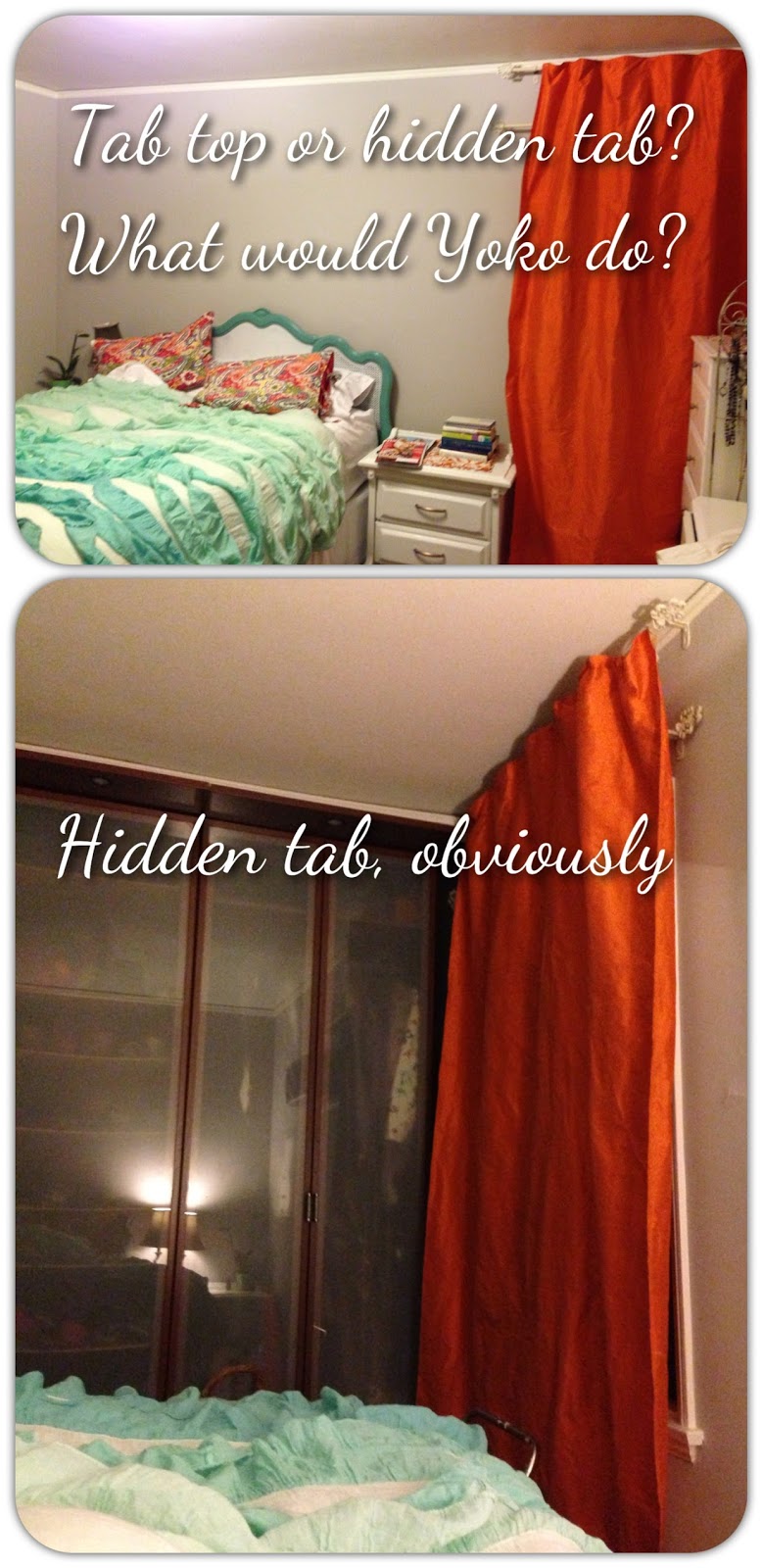
I have been neglecting most tasks outside of work to concentrate on the house. I want to make it the girly palace we so deserve, beautiful and practical and comfy. I am obsessed with orange curtains and in the past week I have: negotiated with fabric terrorists for 10 yards of Tibetan-orange shantung silk; spent way too much time sewing late into the night; realized I could only make two curtains, not the four I needed; gone to Ikea and got white curtains I didn't want or need as a "solution" to the extra 4 yards of shantung silk left over; and realized I really really really want orange silk curtains, so my room can look like a Christo installation and somehow be transformed into a more spiritual place. Oh, also, I had a full debate about tab-top curtains vs. hidden tab and solved it by asking myself, "What would Yoko Ono do?"

In the next few days I will return Ikea curtains and go back to negotiate with fabric terrorists for more silk, and then spend more hours swearing at the sewing machine and working so late that I start hallucinating there are mice running around the table.

Steve and I have decided to make this the best divorce ever. We are painfully kind to each other and offer time with Grace on our "off" days. He fixed my tricky water heater Saturday. I made him this insane BLT salad we both like for dinner tonight.

Grace was eager to get in the bath after drawing on her feet with red magic markers, and so we went through the usual routine. As she pulled off her diaper, she banged her head on the tub and started crying. Then she got in the bath long enough to wash the marker off her feet, which was about 40 seconds, and then wanted to get out. She started wailing again, wrapping her soapy little body tight around me. She wouldn't let me put her down, and directed me to get her some milk and her blanket. And she cried some more, from a deeper place inside her than a head bump (I'm her mama, I decode cries, like a bird-watcher can tell the subtle variation between an American Robin's dawn and daytime calls).

And then she asked for "Mama night-night" and "Dada night-night." Which means she wants both of us come lie down and read to her and snuggle until she goes to sleep.

So each of us laid down on either side of her in my bed, and Steve read a story, and I just breathed in soapy clean little girl smell. After the book I turned out the light, and the room took on low fiery glow from the last of the daylight fighting through the orange shantung silk curtains. Grace took each of our hands and tried to connect us.

Grace, living up to her name every day.


Tuesday, July 16, 2013

Affairs nobody wants to talk about are the most important


My dad's 2003 death left a wake of confusion and conflict that went beyond the great loss of one of the universe's shining stars. 

Dad didn't mean for it to go like that. A few years before, he'd had a will hastily drawn up on his way to the airport before traveling to Europe for a medical procedure, and never bothered to update it or have it thoroughly checked out when he returned.

Elizabeth McGrady

Organizing Dad's wake was a no-brainer: Bring all the food and booze from his house to the Community Center in Lilliwaup, Wash., (which serves as our family hub in times of celebration and mourning) and hire some guy to wail on the bagpipes. Tell some stories. After that, we just didn't know how to "do" death. We'd all had different interpretations of what the will actually meant, and what Dad would have wanted. I'm ashamed to say that even though he'd tried to talk to me about "when the time comes," I wasn't brave enough to have the conversation.  

I think about the fragility of life a lot. But I was sparked into action to organize my own end-of-life affairs after a visit to my excellent cousin Elizabeth McGrady, who runs a company called Angel Files out of Portland, Maine. She helps people organize all their personal and household information and "death wishes," if you will, in case of an accident or worse.

Here are some thoughts from Elizabeth about making the plans nobody ever wants to see come through. 

1. Wait, you mean our affairs don't magically take care of themselves when we die? What's the most important thing someone our age needs to know about how to plan for the end of their lives?
By having your memorial plans written down, you can release thoughts of the unknown and replace this with a sense of empowerment that your final chapter in life has been drafted. This can be one of the kindest things you can do for your family and friends. This way, they are not making big decisions during their time of grieving, but honoring your wishes.  

2. In your work creating Angel Files, what's the most common misperception people have about organizing their lives so that others can close up their affairs?
If people have their financial affairs in order they believe they are "all set."  I believe to leave a meaningful legacy behind is important, such as the story of your life and your experiences. Also,  the story of your home and its possessions.  People don't have the time to have items assessed so valuables can go to Goodwill and lawn sales. If there is a story of an heirloom, let people know what is it so they can know why it's important -- either sentimental value, monetary value, or both.

3. Talk to us about funeral homes. Essential services or ripoffs?
 I have enjoyed interviewing funeral homes, they are very willing to share information.  They are trained, educated and looked after by the FTC.  It is like any business in that it is up to you to be a savvy consumer.  In an emotional state you can add all kinds of things that raise the price.  They take great care of having the bodies treated with respect and dignity.  In some states you do not have to use a funeral home, but realize that there is paperwork that has to be exact in order for everything to be done on your own. It is wise to research the crematory process or the burial process if you wish to do it yourself. Then if you do choose a funeral home you will know exactly what they have done for you.

4. When you're in your 40s, it's so complicated, there are ex-spouses, new spouses, stepkids, maybe even grandkids. What's the best way to organize your affairs so people don't feel left out or cheated? Should you decide who gets Grandma's ring before you die, or just let them duke it out?
It would be helpful to have a draft of who you would like to be beneficiaries and list them by what percentage you would like each individual or charity to receive.  If you have possessions, such as Grandma's ring, it might be worth it to open up a conversation with your family and ask them which five items would they like to receive from you if they had a wish list. It would give you an idea as to what exactly people would wish for instead of assigning items. 

5. Anything else people should know?
Memorial services and funerals can cost half as much as a wedding. A wedding takes many hours to plan, as does a tribute done well to honor someone's life. It is a process and most of it can be enjoyable but the work involved shouldn't be underestimated.  I know people pull it together in a few days or a week, but do you want this frenzy of activity to be planned when people are grieving? I have amassed a checklist and it has more than 130 items on it. After death there are still about 30 items to be done such as: Sending out the death notice to newspapers, contacting people, details of the service, photos organized, music chosen, body choices, a lot of paperwork to be done and many, many minute tasks.  An organized plan would be so appreciated by your loved ones and you can know your end of life tribute will be authentic if you take the time in planning this.


Thursday, July 4, 2013

Independence


May you be free from situations that no longer serve you.
May you break the habits that keep your spirit small.
May you find peace in the the blessings that you have.
May you shine shine shine like a brilliant spark in the night, bringing joy to all who witness your light.